
Faster connection between Asia and Europe: the Arctic Route
Disrupted supply chains, geopolitical instability and growing pressure to speed up transport are leading logistics companies to seek alternatives to traditional sea routes.
The Geis Group is now offering a solution that significantly reduces transit times between Asia and Europe. This is the Arctic Route, a northern sea route passing through Arctic waters. On the route between Shanghai and Hamburg, the Arctic Route can cut transit times to just 22 days, whereas transport via conventional sea routes usually takes almost twice as long. This provides companies with faster delivery of goods and greater flexibility in international trade.
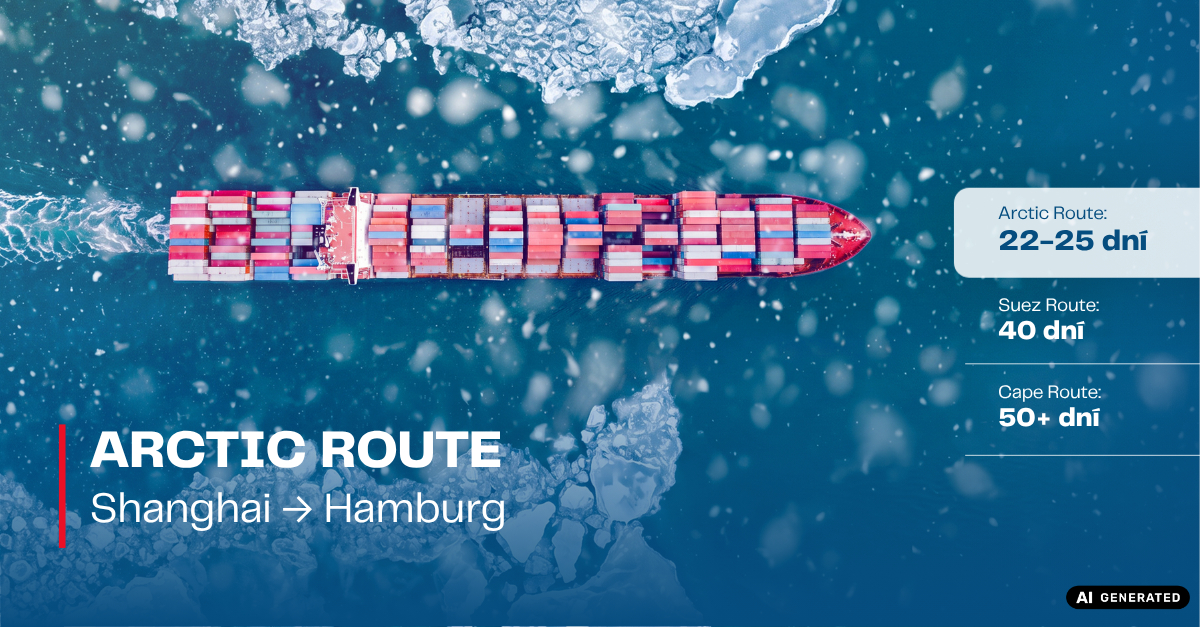
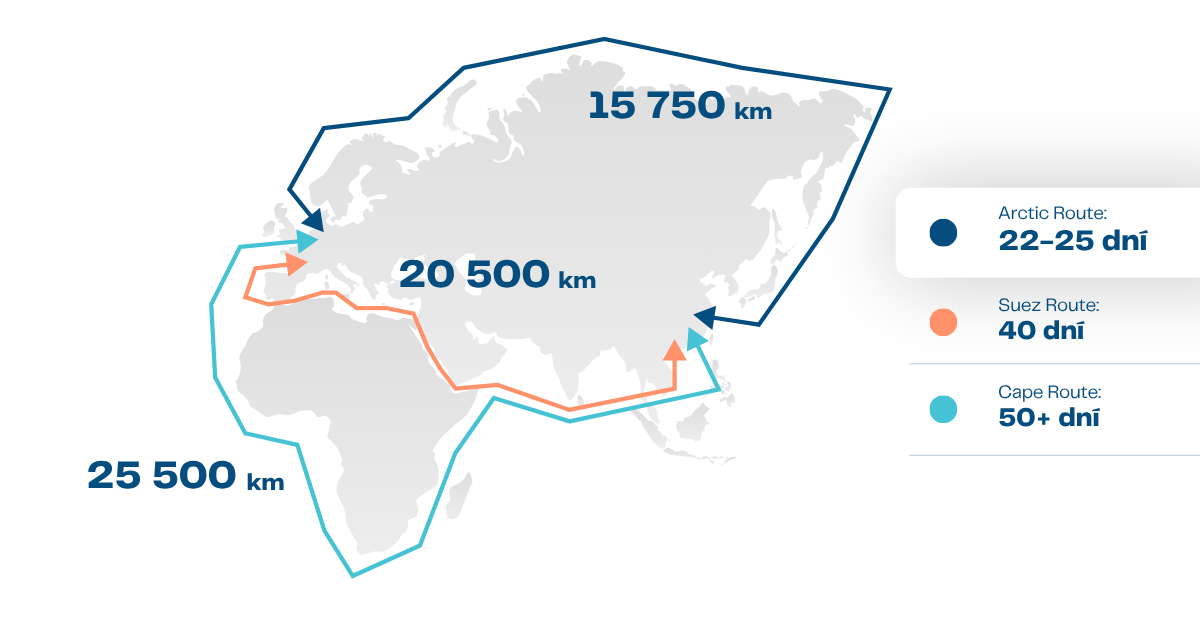
The Arctic Route represents an alternative to standard sea routes, as it utilises a geographically shorter connection between Asia and Europe. The distance between Shanghai and Hamburg in this case is approximately 15,750 km, whilst the route via the Suez Canal measures around 20,500 km and the route around the Cape of Good Hope over 25,500 km. In practice, this means the possibility of a significant reduction in transit time.
“Today’s supply chains require ever-greater flexibility. Serious disruptions on traditional routes show that businesses cannot rely on a single scenario. The Arctic route is the answer to this need for diversification. We offer customers an alternative that allows them to bypass critical points and maintain operational continuity,” comments Martin Tokič, Branch Manager at Geis CZ Air+Sea.
The greatest advantage of the Arctic route is transit time. For the Shanghai–Hamburg route, transit can take approximately 22–25 days. By way of comparison, using the route via the Suez Canal means a transit time of almost 40 days, whilst the route around the Cape of Good Hope takes over 50 days. This difference can be particularly significant for businesses importing goods from Asia that need to respond quickly to changing demand, replenish stocks or make deliveries by specific deadlines.
The route via the Arctic Ocean may also be an attractive alternative for some companies in terms of potential reductions in emissions associated with transport. A shorter distance can lead to lower fuel consumption. However, the ultimate environmental impact depends, amongst other things, on the type of vessel, sailing conditions and the parameters of the specific voyage.
“Diversifying transport routes is now becoming one of the key elements in building supply chain resilience. The Arctic route does not replace traditional connections, but can be a valuable complement to them. For customers, this means greater choice and the ability to tailor transport solutions to the nature of the specific cargo, the expected delivery time and current market conditions,” adds Tokič.
Due to temperature and weather conditions, the route operates seasonally. The sailing season lasts approximately from early July to late October, enabling importers to plan deliveries perfectly for key sales peaks, such as the pre-Christmas peak season. Crucially, the safety of voyages on this challenging route is guaranteed by the use of modern, well-equipped vessels with the appropriate ice class and the constant assistance of icebreakers on key sections, which ensures the stability of timetables and standard conditions for securing cargo.
Given the seasonal nature of the route, the availability of services and detailed transport conditions depend on the current sailing schedule. Geis prepares bespoke quotations for interested parties, taking into account, amongst other things, prices, transport conditions and current sailing dates.
Gallery


